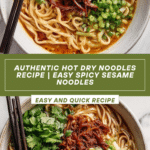
Hot Dry Noodles (热干面) Recipe
Introduction
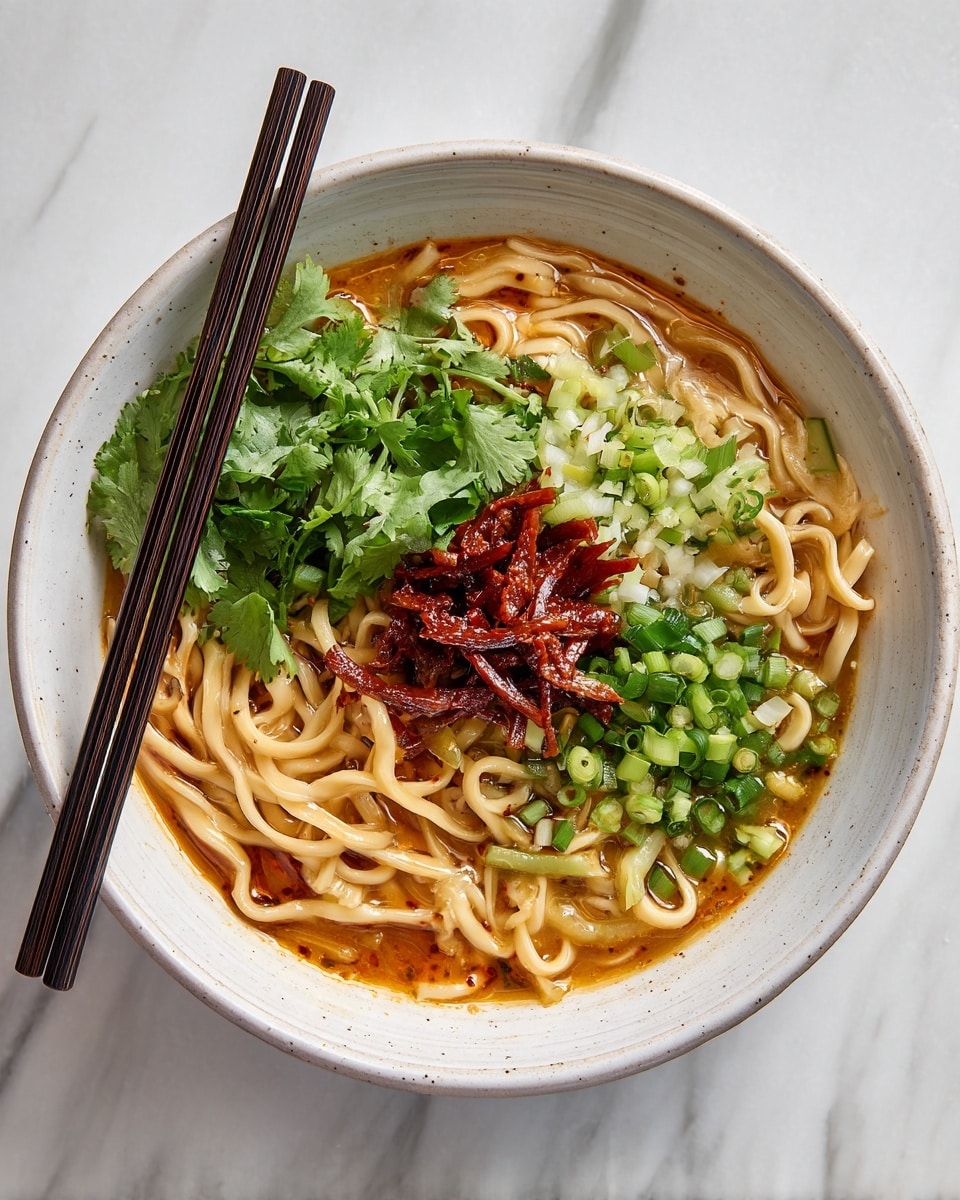
Hot Dry Noodles (热干面) is a popular and comforting dish from Wuhan, China, known for its rich, savory sesame sauce and perfectly cooked noodles. This recipe combines aromatic spices, a flavorful broth, and a creamy sesame paste to create a delicious and satisfying meal that’s easy to prepare at home.
Ingredients
- 10 oz fresh alkaline noodles, cooked or uncooked (or regular wheat noodles) (*Footnote 1)
- 1 tablespoon sesame oil
- 1 teaspoon vegetable oil
- 2 green onions, whites only (greens reserved)
- 2 slices ginger
- 2 cloves garlic, lightly smashed
- 1 star anise
- 5 cloves
- 1 cinnamon stick
- 1/4 teaspoon Sichuan peppercorns
- 2 tablespoons Shaoxing wine (or dry sherry)
- 1 tablespoon light soy sauce
- 1 teaspoon sugar
- 2 cups beef stock (or chicken stock, or vegetable stock)
- 2 cloves garlic, minced
- 3 tablespoons hot water
- 3 tablespoons Chinese sesame paste (or unsweetened natural peanut butter)
- 1 teaspoon sesame oil
- 2 teaspoons light soy sauce
- 1 teaspoon dark soy sauce
- 1 1/2 teaspoons Chinkiang vinegar
- 1 teaspoon sugar
- 1/8 teaspoon white pepper powder
- 1/8 teaspoon five spice powder
- 2 to 4 tablespoons homemade chili oil (optional)
- Reserved green onion, sliced
- 1/4 cup pickled radish (or mustard greens or your favorite pickles)
- Cilantro leaves
Instructions
- Step 1: Prepare the garlic water by combining the minced garlic cloves with 3 tablespoons of hot water in a small bowl. Set aside to infuse.
- Step 2: Make the master sauce by heating the vegetable oil in a small pot over medium heat. Add the green onion whites, ginger, and smashed garlic. Sauté until fragrant, about 1 minute. Add star anise, cloves, and cinnamon stick and cook another 30 seconds.
- Step 3: Pour in Shaoxing wine, light soy sauce, sugar, and beef stock. Bring to a boil, then reduce heat and simmer for 10 to 15 minutes. Strain the broth and discard the spices and aromatics.
- Step 4: For the sesame sauce, slowly whisk the garlic water into the Chinese sesame paste until smooth. Add the remaining ingredients: sesame oil, light soy sauce, dark soy sauce, Chinkiang vinegar, sugar, white pepper, and five spice powder. Mix well.
- Step 5: Prepare the noodles: Bring a large pot of water to a boil. If using cooked fresh alkaline noodles, briefly rinse in hot water to refresh and drain. For uncooked fresh noodles, toss them with sesame oil, then cook in boiling water until al dente. For dried noodles, cook according to package instructions. Drain and divide noodles between two bowls.
- Step 6: Assemble the dish by adding 2 tablespoons of the strained broth, 2 tablespoons of sesame sauce, and 1 tablespoon of chili oil (if using) to each bowl. Garnish with sliced green onion greens, pickled radish (or other pickles), and cilantro leaves.
- Step 7: Toss everything together well, then taste and adjust seasoning by adding more sauce or broth if needed. Serve hot or cold.
Tips & Variations
- Use fresh alkaline noodles for the most authentic texture, but regular wheat noodles work well in a pinch.
- Adjust chili oil quantity to control the heat level, or omit for a milder flavor.
- Substitute Chinese sesame paste with natural peanut butter if sesame paste is unavailable, though the flavor will differ slightly.
- Pickled mustard greens or other favorite pickles can replace pickled radish to vary the tangy contrast.
- Make the broth and sauces ahead of time to save preparation time on serving day.
Storage
You can prepare the noodles, broth, and sauces separately and store them in the refrigerator for up to 3 days. Keep them in airtight containers to maintain freshness. When ready to eat, reheat the broth and warm the noodles briefly if desired, then assemble the dish as directed.
How to Serve
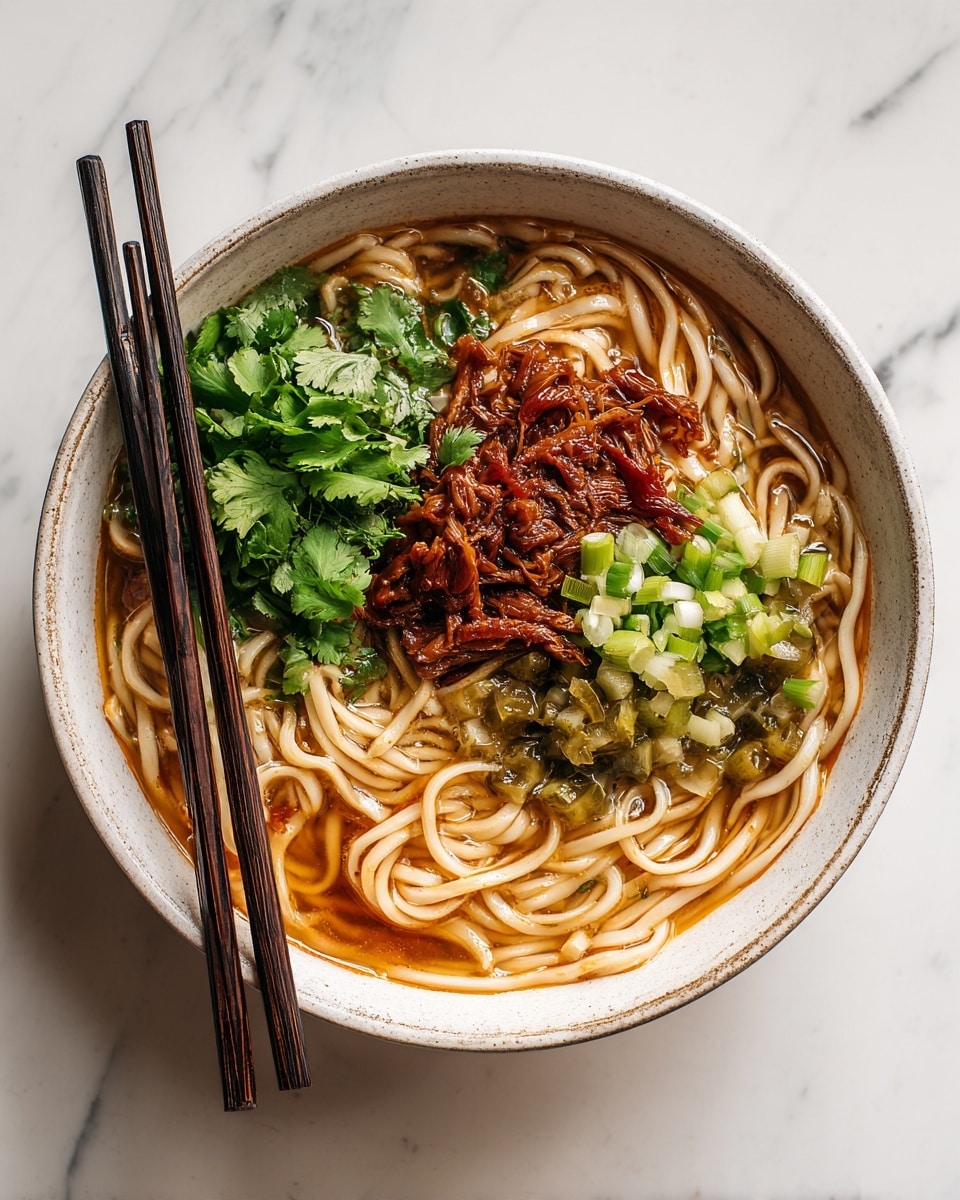
Serve this delicious recipe with your favorite sides.
FAQs
Can I use dried noodles instead of fresh alkaline noodles?
Yes, dried wheat noodles can be used as a substitute. Cook them according to package instructions and drain well before assembling the dish. The texture will be slightly different but still delicious.
Is the chili oil necessary for this recipe?
No, the chili oil is optional. It adds a spicy kick and depth to the dish, but you can omit it if you prefer a milder flavor or do not have it on hand.
PrintHot Dry Noodles (热干面) Recipe
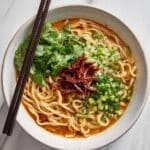
Hot Dry Noodles (热干面) is a classic street food from Wuhan, featuring fresh alkaline noodles tossed in a flavorful sesame sauce and savory spiced broth. This recipe combines aromatic spices, creamy sesame paste, and a zing of chili oil for a comforting and satisfying meal perfect for any time of day.
- Prep Time: 10 minutes
- Cook Time: 25 minutes
- Total Time: 35 minutes
- Yield: 2 servings 1x
- Category: Noodles and Pasta
- Method: Stovetop
- Cuisine: Chinese
Ingredients
Noodles
- 10 oz fresh alkaline noodles, cooked or uncooked (or regular wheat noodles)
- 1 tablespoon sesame oil
- 1 teaspoon vegetable oil
Spice Aromatics
- 2 green onions, whites only (reserve greens for garnish)
- 2 slices ginger
- 2 cloves garlic, lightly smashed
- 1 star anise
- 5 cloves
- 1 cinnamon stick
- 1/4 teaspoon Sichuan peppercorns
Broth and Sauce
- 2 tablespoons Shaoxing wine (or dry sherry)
- 1 tablespoon light soy sauce
- 1 teaspoon sugar
- 2 cups beef stock (or chicken or vegetable stock)
- 2 cloves garlic, minced
- 3 tablespoons hot water
- 3 tablespoons Chinese sesame paste (or unsweetened natural peanut butter)
- 1 teaspoon sesame oil
- 2 teaspoons light soy sauce
- 1 teaspoon dark soy sauce
- 1 1/2 teaspoons Chinkiang vinegar
- 1 teaspoon sugar
- 1/8 teaspoon white pepper powder
- 1/8 teaspoon five spice powder
- 2 to 4 tablespoons homemade chili oil (optional)
Garnishes
- Reserved green onion, sliced
- 1/4 cup pickled radish (or mustard greens or your favorite pickles)
- Cilantro leaves
Instructions
- Prepare Garlic Water: Combine the 2 cloves of minced garlic with 3 tablespoons of hot water in a small bowl. Set this mixture aside to infuse while you prepare other components.
- Make the Master Sauce: Heat 1 teaspoon vegetable oil in a small pot over medium heat. Add the white parts of green onions, ginger slices, and smashed garlic cloves; sauté until fragrant, about 1 minute. Add star anise, cloves, and cinnamon stick, cooking for an additional 30 seconds. Pour in Shaoxing wine, light soy sauce, sugar, and beef stock. Bring to a boil, then reduce heat to simmer for 10 to 15 minutes to develop flavor. Strain out aromatics and spices, keeping only the broth.
- Prepare Sesame Sauce: Slowly whisk the garlic water into the Chinese sesame paste until smooth and well combined. Add 1 teaspoon sesame oil, light soy sauce, dark soy sauce, Chinkiang vinegar, sugar, white pepper powder, and five spice powder. Mix thoroughly to build a creamy, flavorful sauce.
- Cook the Noodles: Bring a large pot of water to boil. If using cooked alkaline noodles, quickly rinse them in the hot water to refresh their texture and then drain. For uncooked fresh ramen noodles, toss with sesame oil before adding to boiling water and cook until al dente. For regular dried noodles, cook following package instructions. Once cooked, drain noodles thoroughly and divide them evenly between two serving bowls.
- Assemble Bowls: Add 2 tablespoons of the master broth, 2 tablespoons of the sesame sauce, and 1 tablespoon of chili oil (if using) to each bowl of noodles. Garnish with sliced green onions, pickled radish or your chosen preserved vegetables, and fresh cilantro leaves.
- Toss and Serve: Mix all ingredients together well to coat the noodles evenly with sauce and broth. Adjust seasoning by adding more broth or sesame sauce to taste. Serve immediately, enjoying hot or cold as preferred.
- Storage: Prepare the noodles, broth, and sauces separately in advance and store in the refrigerator for up to 3 days. Assemble freshly when ready to serve to maintain the best texture and flavor.
Notes
- Alkaline noodles are preferred for authenticity but regular wheat noodles can be used.
- Chili oil is optional but adds a necessary spicy kick to the dish.
- Homemade chili oil yields the best flavor but store-bought can be substituted.
- Pickled radish can be replaced by mustard greens or any favorite preserved vegetable for garnish.
- This dish can be served warm or cold, depending on preference.
- Separately storing components helps maintain noodle texture and flavor integrity for meal prep.
Keywords: Hot Dry Noodles, Wuhan Noodles, Chinese Sesame Noodles, Street Food, Sesame Sauce Noodles