
Authentic Miso Soup Recipe
Introduction
Miso soup is a simple yet comforting Japanese classic that’s quick to prepare. This authentic recipe features a delicate dashi broth combined with silken tofu and seaweed, offering a warm and nourishing start to any meal.
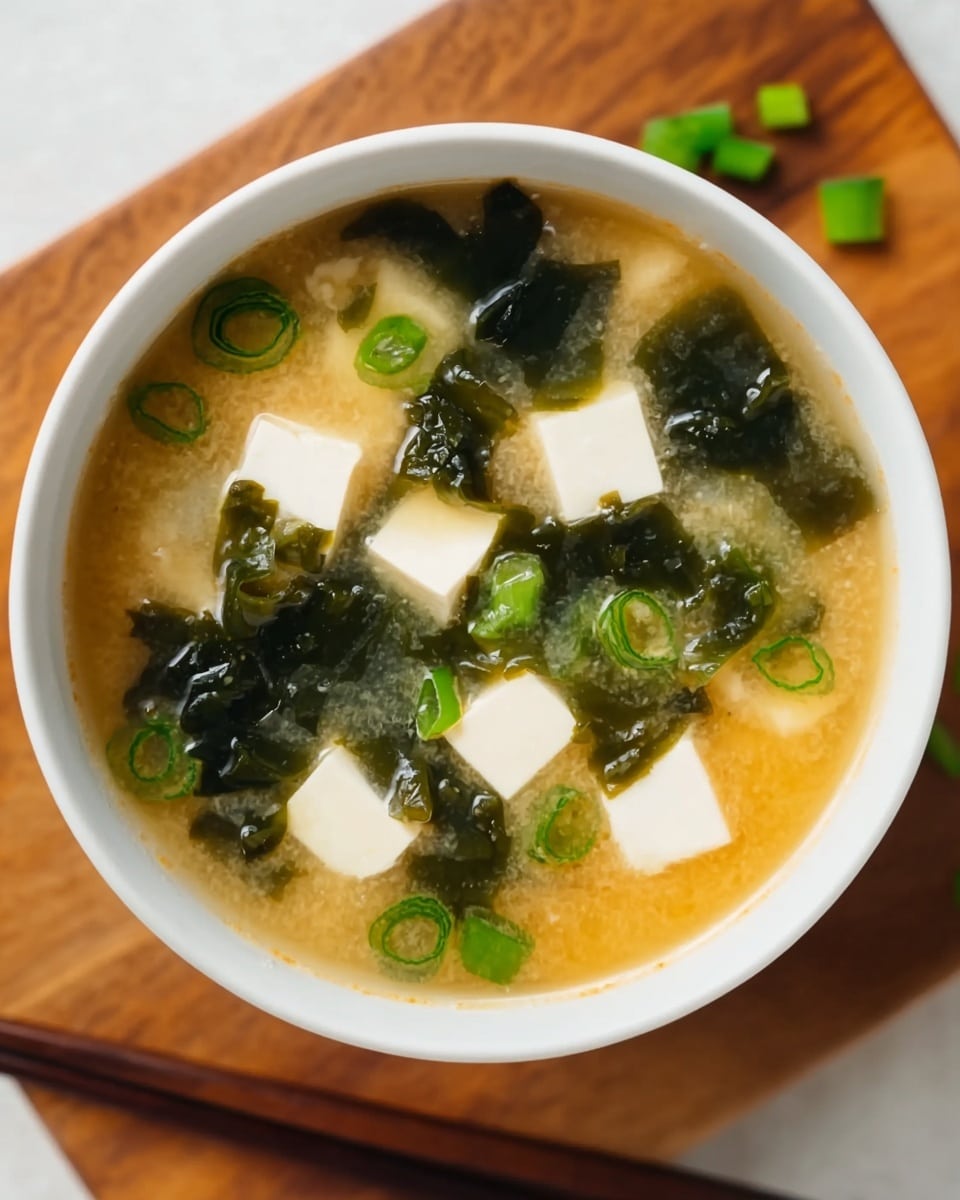
Ingredients
- 4 cups water
- 6 inch Japanese kombu (dried kelp), rinsed (about 15 cm)
- 1 oz bonito flakes, dried and shaved
- 1 oz dried seaweed (soaked in warm water and drained)
- 4 oz silken tofu (cut into small pieces)
- 2 ½ to 3 tablespoons white miso paste
- 1 tablespoon scallion (chopped)
- Mushrooms, noodles, or a poached egg (optional additions)
Instructions
- Step 1: Make the dashi broth by adding 4 cups of water and the kombu to a pot. Heat over medium heat until just before boiling, then remove the kombu. Add bonito flakes and simmer for 5 minutes, skimming off any foam.
- Step 2: Strain the broth through a fine mesh sieve or cheesecloth, discarding the bonito flakes. Return the clear broth to the pot and bring to a gentle simmer.
- Step 3: Add the soaked seaweed and cubed tofu to the broth. Simmer gently for 3 minutes until the tofu is heated through.
- Step 4: Turn off the heat. In a separate bowl, mix a few spoonfuls of hot broth with the miso paste until smooth. Stir this mixture back into the pot carefully, avoiding boiling after adding miso to preserve flavor.
- Step 5: Ladle the soup into bowls, top with chopped scallions, and serve immediately. Add mushrooms, noodles, or a poached egg if desired.
Tips & Variations
- For a richer flavor, try using red or mixed miso paste instead of white miso.
- Add shiitake mushrooms or udon noodles for a heartier soup.
- Be careful not to boil the soup after adding the miso, as it can turn bitter.
- Use silken tofu for a delicate texture, or firm tofu for a more substantial bite.
Storage
Store leftover miso soup in an airtight container in the refrigerator for up to 2 days. When reheating, warm gently without boiling to retain the miso’s flavor and prevent curdling of tofu.
How to Serve
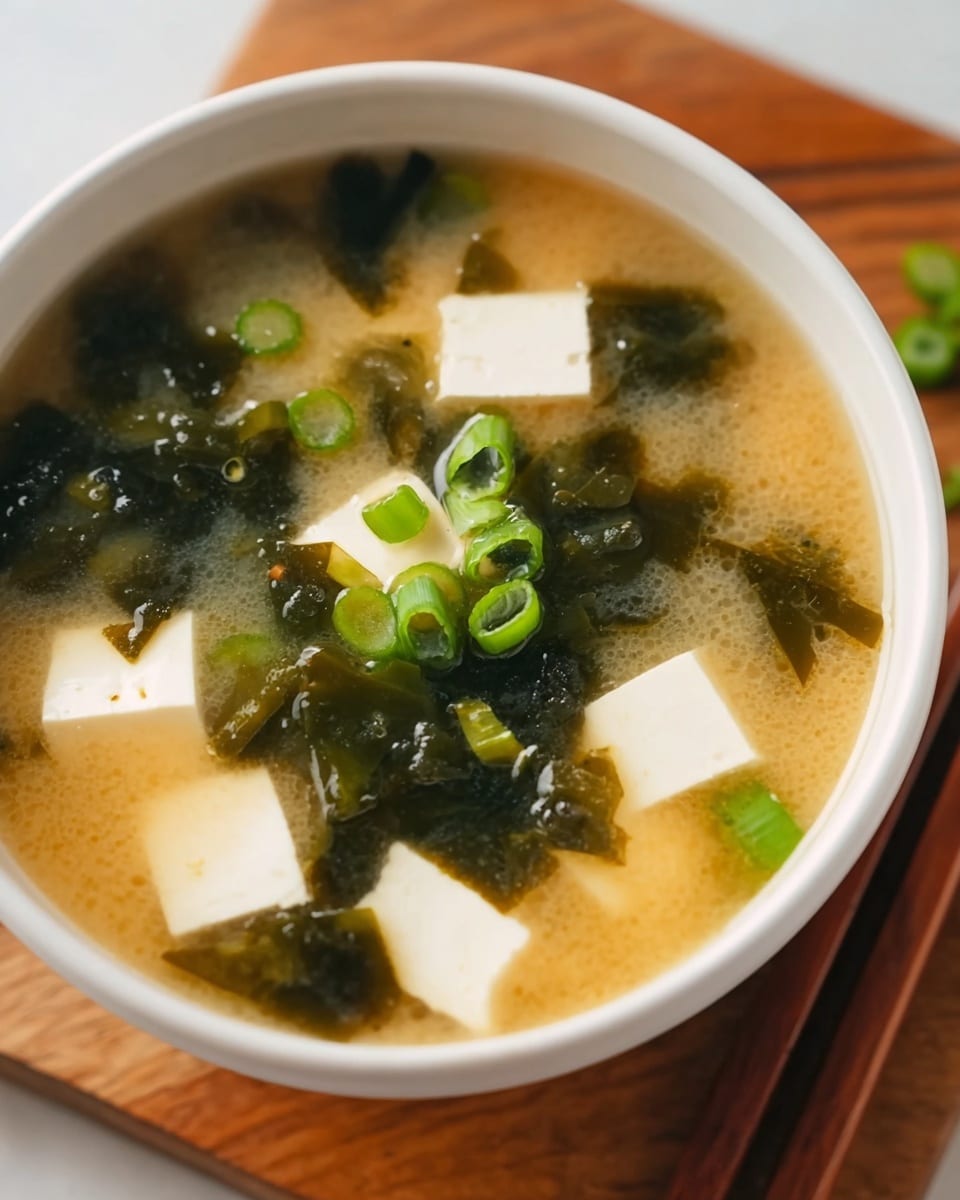
Serve this delicious recipe with your favorite sides.
FAQs
Can I make miso soup without kombu and bonito flakes?
While kombu and bonito flakes are traditional for dashi broth, you can use vegetable broth or instant dashi powder as a convenient substitute for a quick miso soup.
How much miso paste should I add?
The amount varies by taste, but 2 ½ to 3 tablespoons of white miso paste per 4 cups of broth is a good starting point. Adjust to your preference, adding more for a stronger flavor.
PrintAuthentic Miso Soup Recipe

This authentic Japanese Miso Soup recipe offers a simple, traditional preparation that highlights the rich umami flavors of kombu, bonito flakes, and miso paste. Perfect as a comforting starter or a light meal, this soup combines silken tofu, seaweed, and scallions for a delicate balance of taste and texture, ready in just 10 minutes.
- Prep Time: 5 minutes
- Cook Time: 10 minutes
- Total Time: 15 minutes
- Yield: 2 servings 1x
- Category: Soup
- Method: Stovetop
- Cuisine: Japanese
Ingredients
Broth Ingredients
- 4 cups water
- 6 inch Japanese kombu (dried kelp), rinsed (about 15 cm)
- 1 oz bonito flakes, dried and shaved
Soup Ingredients
- 1 oz dried seaweed (soaked in warm water and drained)
- 4 oz silken tofu (cut into small pieces)
- 2 ½ to 3 tablespoons white miso paste
- 1 tablespoon scallion (chopped)
Optional Additions
- Mushrooms
- Noodles
- Poached egg
Instructions
- Make the Dashi Broth: Add 4 cups of water and kombu to a pot. Heat over medium heat until the water is just about to boil. Remove the kombu before boiling to avoid bitterness. Then add the bonito flakes and simmer gently for 5 minutes. Skim off any foam that forms on the surface.
- Strain and Reheat: Strain the broth through a fine mesh sieve or cheesecloth to remove the bonito flakes. Discard the flakes and return the clear broth to the pot. Bring it back to a gentle simmer over low heat.
- Add Seaweed and Tofu: Add the soaked and drained dried seaweed along with the cubed silken tofu to the broth. Let it simmer gently for about 3 minutes until the tofu is warmed through.
- Stir in Miso: Turn off the heat completely to prevent boiling, which can affect the flavor of miso. In a separate bowl, mix a few spoonfuls of the hot broth with the miso paste until smooth. Slowly stir this mixture back into the pot until well combined.
- Top and Serve: Ladle the miso soup into serving bowls, garnish with chopped scallions, and add any optional ingredients like mushrooms, noodles, or a poached egg if desired. Serve immediately while hot.
Notes
- Do not boil the soup after adding miso paste to preserve its delicate flavors and probiotics.
- Adjust miso quantity based on your preferred saltiness and flavor intensity.
- Kombu and bonito flakes are essential for an authentic dashi broth but can be omitted for a vegetarian version (use shiitake mushroom stock instead).
- Silken tofu is best for a smooth texture; firmer varieties can alter the mouthfeel.
- Optional ingredients like mushrooms, noodles, or a poached egg can be added for extra substance.
Keywords: miso soup, Japanese soup, dashi broth, tofu soup, traditional miso soup, umami soup, quick soup recipe