Artisan Bread Recipe
Introduction
This artisan bread recipe produces a rustic, crusty loaf with a chewy interior using simple ingredients and straightforward techniques. Perfect for beginners and experienced bakers alike, it requires minimal hands-on time and delivers impressive results.
Ingredients
- 3 cups (395 grams) all-purpose flour or bread flour
- 1/2 tablespoon Kosher salt
- 1/4 ounce instant or active dry yeast (about 2 1/4 teaspoons)
- 1 1/2 cups warm water (approximately 105°F)
Instructions
- Step 1: In a large bowl, combine the flour, salt, and yeast. Pour the warm water over the dry ingredients, making sure the water is not too hot to avoid killing the yeast.
- Step 2: Mix the ingredients using a dough whisk, spatula, wooden spoon, or your hands until the dough is somewhat wet and sticky. Add a little more flour if it feels too sticky to handle.
- Step 3: Cover the bowl with a towel or plastic wrap sprayed with nonstick spray. Let the dough rise at room temperature for 2 to 10 hours, or overnight for a deeper flavor development.
- Step 4: Wet your hands and turn the sticky dough onto a lightly floured surface. Gently fold the sides of the dough toward the center to shape it into a round boule or two loaves, tucking the ends underneath. Avoid punching down, kneading, or rolling out the dough.
- Step 5: Place the shaped dough on a piece of parchment paper. Lightly dust the top with flour and use a bread knife to score 1 to 4 lines across the surface. Let it rest for 20 to 30 minutes.
- Step 6: Preheat your oven to 450°F. Place a baking stone, pizza stone, Dutch oven, or cast iron skillet inside while the oven heats.
- Step 7: Slide the dough on the parchment paper onto the hot stone or into the preheated Dutch oven. For a crispier crust, place 1 cup of hot water in a small broiler pan or add 5 ice cubes to the bottom of the oven to create steam. Quickly close the door to trap the steam.
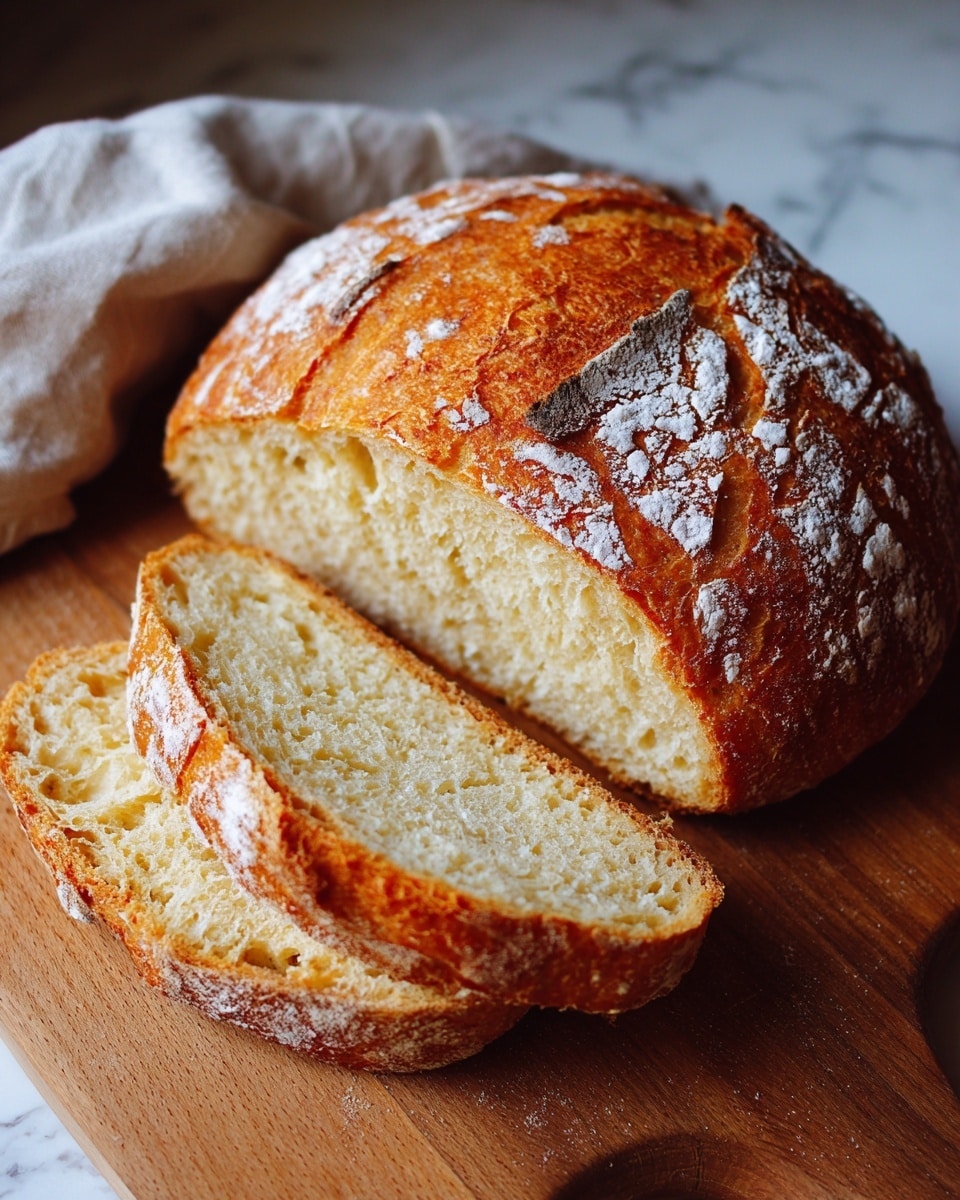
- Step 8: Bake the bread for 25 to 30 minutes or until the crust is golden brown and the loaf sounds hollow when tapped.
- Step 9: Remove the bread and cool it on a wire rack for at least 30 minutes before slicing and serving.
Tips & Variations
- Use bread flour instead of all-purpose flour for a chewier texture with better gluten development.
- Experiment with adding herbs like rosemary or thyme to the dough for extra flavor.
- For a crispier crust, bake with steam created by adding water or ice cubes to the oven as described.
- letting the dough rise overnight in the refrigerator enhances flavor and makes the dough easier to handle in the morning.
Storage
Store the bread in a paper bag to prevent it from becoming soft or soggy. It stays fresh at room temperature for up to 2 days. For longer storage, wrap the bread tightly in plastic wrap and freeze; thaw at room temperature before slicing. Reheat slices in a toaster or oven to restore crustiness.
How to Serve
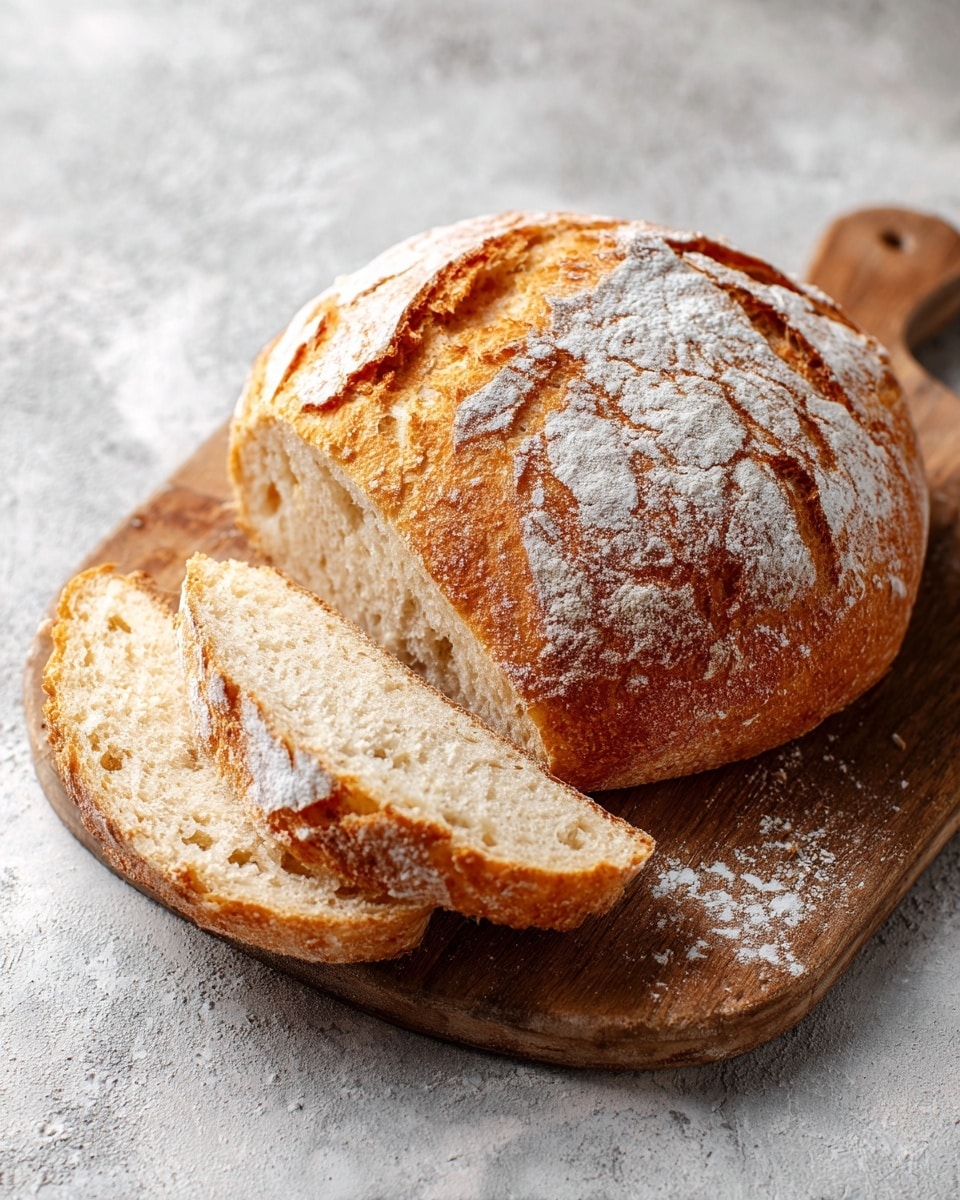
Serve this delicious recipe with your favorite sides.
FAQs
Can I use active dry yeast instead of instant yeast?
Yes, you can use active dry yeast. It may need to be dissolved in warm water for 5–10 minutes before mixing with the flour, unlike instant yeast which can be added directly.
What if my dough is too sticky to handle?
If the dough is too sticky, gradually add small amounts of flour while mixing until it becomes manageable but still slightly tacky. Avoid adding too much flour as it can make the bread dense.
PrintArtisan Bread Recipe

This artisan bread recipe yields a crusty, rustic loaf with a chewy interior, perfect for sandwiches or as a side to any meal. Made with simple ingredients and requiring minimal kneading, this bread ferments slowly to develop rich flavor and a delightful texture. It’s baked at high heat on a baking stone or cast iron to achieve an authentic crust.
- Prep Time: 15 minutes
- Cook Time: 30 minutes
- Total Time: 2 hours 45 minutes to 10 hours 45 minutes (depending on rise time)
- Yield: 12 servings 1x
- Category: Bread
- Method: Baking
- Cuisine: French-inspired
- Diet: Vegetarian
Ingredients
Ingredients
- 3 cups (395 grams) all-purpose flour or bread flour
- 1/2 tablespoon kosher salt
- 1/4 ounce instant or active dry yeast (approximately 2 1/4 teaspoons)
- 1 1/2 cups warm water (about 105°F)
Instructions
- Make dough: In a large bowl, combine the flour, kosher salt, and yeast. Pour the warm water (about 105°F) over the dry ingredients to avoid killing the yeast.
- Mix: Use a dough whisk, spatula, wooden spoon, or your hands to mix the ingredients together. The dough should be wet and sticky; if too sticky to handle, add a bit more flour gradually.
- Rise: Cover the bowl with a towel or plastic wrap lightly sprayed with nonstick spray. Let the dough rise at room temperature for 2 to 10 hours, or even overnight. The longer it ferments, the more complex the flavor will be.
- Shape: Lightly flour your hands and surface. Turn the sticky dough onto the floured workspace without punching down or kneading aggressively. Gently fold the dough edges into the center to form your preferred shape, typically a round boule or two loaves, tucking the ends underneath.
- Dust and rest: Place the shaped dough on parchment paper. Lightly dust the top with flour and score with a bread knife by making 1 to 4 lines to allow proper expansion. Let the dough rest for 20 to 30 minutes.
- Bake preparation: Preheat your oven to 450°F (230°C). Place a baking stone, pizza stone, Dutch oven, or cast iron skillet inside to heat thoroughly.
- Bake: Slide the parchment with the dough onto the hot stone or skillet. For a crustier bread, add 1 cup of hot water to a small broiler pan or place 5 ice cubes at the bottom of the oven to create steam. Bake for 25 to 30 minutes, until the bread is golden brown.
- Cool and slice: Remove the bread and allow it to cool completely on a wire rack for at least 30 minutes to finish cooking and to set the crust. Slice and serve. Store leftovers in a paper bag to maintain crust integrity and prevent softening.
Notes
- Do not knead the dough aggressively; minimal handling preserves the airy texture.
- Longer fermentation times improve flavor and crumb structure.
- Using a baking stone or cast iron skillet improves crust development.
- Steam in the oven creates a crispier crust.
- Allow the bread to cool fully before slicing to avoid a gummy crumb.
- Store the bread in a paper bag rather than plastic to prevent moisture buildup.
Keywords: artisan bread, homemade bread, no-knead bread, crusty bread, French boule, bread recipe